


Summary (as of 27.10.2026)
High visibility clothing is divided into three classes 1, 2 and 3 according to the harmonized standard DIN EN ISO 20471:2017-03. The classification is based on the minimum visible areas of fluorescent background material (in yellow, orange-red or red) and retroreflective material. The required protection class at the workplace is not determined by the purchasing department, but by the risk assessment under Section 5 of the German Occupational Safety and Health Act and DGUV Information 212-016, depending on traffic speed, poor visibility and visibility conditions.
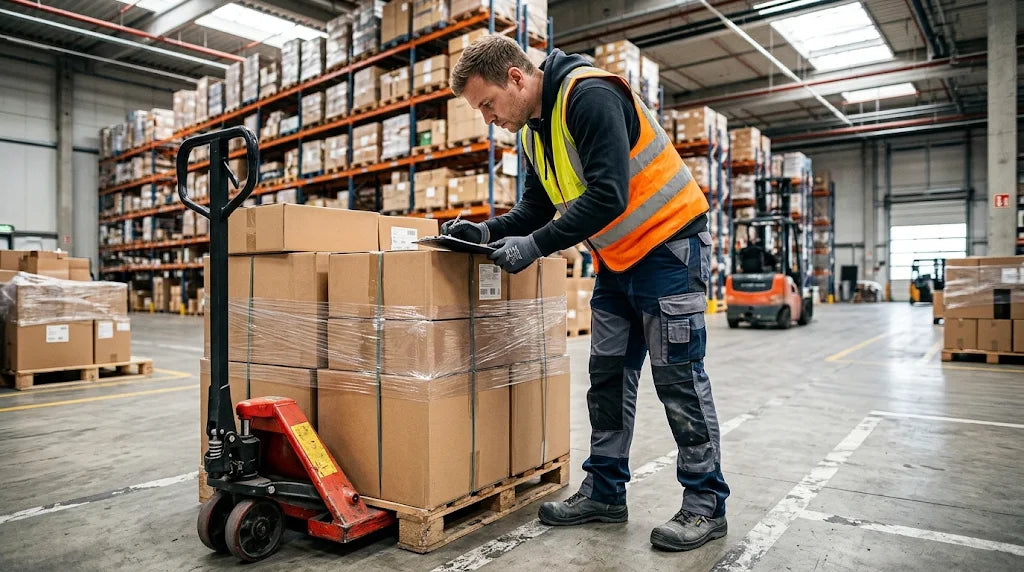
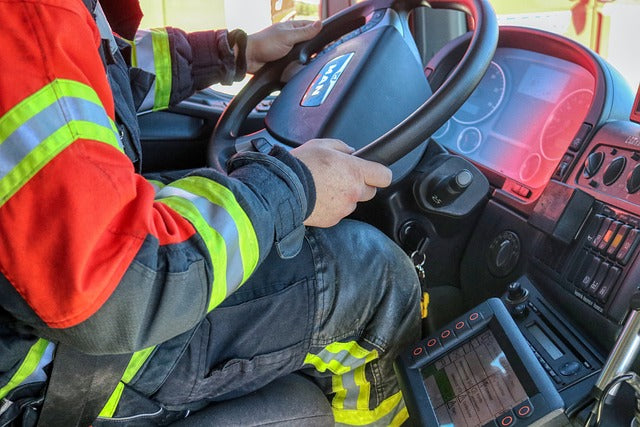
At dusk, in heavy rain, snowfall or dense fog during autumn and winter, fractions of a second often determine whether a driver notices a person on the roadside, at a construction site, in a transshipment yard or in municipal winter services in time. The human retina perceives fluorescent colours in daylight and poor visibility conditions much earlier than normal textile colours, while retroreflective strips reflect headlight beams directly back to the vehicle.
High visibility clothing is therefore an essential part of personal protective equipment (PPE) under Regulation (EU) 2016/425. But what minimum areas does the European standard require? How do classes 1, 2 and 3 differ in practical use? And how can high visibility be combined with weather protection clothing without violating statutory requirements? This guide provides answers for safety officers and purchasing professionals.
The performance system according to DIN EN ISO 20471:2017-03
The current version of the standard DIN EN ISO 20471:2017-03 (European version EN ISO 20471:2013+A1:2016; a revision as draft prEN ISO 20471:2026 is currently in preparation) sets strict requirements for the visibility of employees in hazardous work environments. The underlying functional principle is based on the permanent combination of two different optical materials:
- Fluorescent background material: It absorbs invisible UV components of daylight and re-emits them in the visible spectrum. This makes the clothing appear to glow. According to the standard, the colours Fluorescent Yellow, Fluorescent Orange-Red and Fluorescent Red are approved for occupational safety. In the area of public road traffic, the German Road Traffic Regulations (VwV-StVO to Section 35 StVO) specifically prescribe yellow or orange-red shades for certain areas of operation.
- Retroreflective strips: They consist of microprisms or glass beads that reflect incident light (e.g. from car headlights) exactly back to where it came from. This illuminates the wearer brightly in the dark and under artificial lighting.
In addition, the standard tests the physical properties of the textiles: The background material must meet tear and tensile strength requirements, show colour fastness against sweat, washing and UV light, and ensure body-appropriate breathability.
The three high visibility classes by minimum area in detail
The division into classes 1, 2 and 3 is not based on guesswork, but exactly on the square footage of the visible background and reflective material on the finished garment. The higher the hazard and the faster the flowing traffic, the larger the illuminated area must be:
| High visibility class | Minimum area of background material | Minimum area of retroreflective material | Typical application in the workplace |
|---|---|---|---|
| Class 1 | at least 0.14 m² | at least 0.10 m² | Activities with low hazard on enclosed factory grounds without public through traffic or as a supplement to normal clothing (for example, simple trousers with reflective piping). |
| Class 2 | at least 0.50 m² | at least 0.13 m² | Construction sites in inner-city areas, waste collection, logistics areas, smaller high visibility vests or T-shirts. |
| Class 3 | at least 0.80 m² | at least 0.20 m² | Working on federal roads, motorways, in railway construction or in winter road traffic at high speeds (usually achieved in the workplace by high visibility jackets with sleeves or by suits). |
In practice, pure vests often only achieve class 2, as the fabric area covered by the torso is limited. To achieve the highest visibility level (class 3), a jacket with sleeves is required or a targeted combination of a high visibility jacket and matching high visibility trousers. You can find suitable jackets and trousers in our range, as well as equipment for road construction.
Class 2 or class 3? Requirements of the risk assessment
The decision on whether class 2 or class 3 high visibility clothing must be procured for the company must not be made arbitrarily. Under Section 5 of the German Occupational Safety and Health Act (ArbSchG) and the PPE Use Ordinance, the employer must determine the circumstances within the framework of the risk assessment. Guidance is provided by the DGUV Information 212-016 "High visibility clothing" of the statutory accident insurance.
According to these requirements, class 3 high visibility clothing is mandatory or strongly recommended for:
- Work in the area of federal roads, motorways and comparable multi-lane carriageways with a permitted or average traffic speed of more than 60 km/h.
- Poor weather and visibility conditions (heavy fog, heavy rain, snowfall or darkness during outdoor work).
- Activities where the body is frequently obscured by machines, structures, fences, vehicles or stored material in a bent-over or concealed working position.
- Municipal weather and cold protection in road maintenance services.
For construction sites in protected inner-city areas with speed limits of 30 or 50 km/h, as well as on secured company grounds without heavy goods through traffic, high visibility clothing of class 2 is sufficient in many cases. If you are unsure, clarify the classification with your occupational safety specialist. You can find suitable complete outfits under workwear.
High visibility vests, jackets and trousers: How to combine protection classes
If different garments are worn on top of each other (e.g. high visibility trousers and a high visibility jacket), the individual areas are added together. However, DIN EN ISO 20471 requires a formal manufacturer approval for the assignment of the overall rating (for example, class 3 from a jacket and trousers). Manufacturers test which combinations exactly achieve the minimum areas as part of the type testing.
Wearing a classic high visibility vest over normal, dark rainwear does improve the protection visually, but does not replace a certified high visibility jacket if the risk assessment explicitly requires class 3. Therefore, always pay attention to the information in the declaration of conformity when purchasing.
Combining high visibility and weather protection
In autumn and winter outdoor areas, high visibility clothing must also protect against the weather (rain, wind and frost). Pure summer high visibility vests are no longer sufficient. Companies instead opt for certified high visibility parkas or softshell jackets that, in addition to DIN EN ISO 20471, also meet the DIN EN ISO 24232 standard (formerly DIN EN 343, rain protection and breathability via the RET value) or DIN EN 342 (cold protection clothing). This ensures that employees do not get chilled in wet and cold weather and that the high visibility effect remains fully intact. How to read the classes for waterproofing and breathability is explained in the article Weather protection clothing EN 343 and EN ISO 24232 clearly explained.
Care, visual inspection and end-of-life of high visibility clothing
Even the highest quality high visibility clothing loses its brightness in the tough daily routine of a construction site due to dirt, dust, paint splashes and UV radiation. According to DGUV Information 212-016 and the manufacturer's specifications, the following rules must be observed:
- Regular cleaning: Adhere exactly to the maximum wash cycles and wash temperatures stated on the label. Aggressive detergents or excessively high temperatures can destroy the fluorescent dyes and damage the microprisms of the reflective strips.
- Daily visual inspection: Check the clothing before putting it on. If the yellow or orange material is heavily soiled by oil, soot or paint, or is visibly faded, it will no longer be sufficiently conspicuous in road traffic.
- Damaged reflective strips: If retroreflective strips have come loose, show cracks, or are scratched, they no longer reflect headlight beams correctly. The garment has reached the end of its useful life and must be removed from service.
Checklist: Procuring high visibility clothing for the company
- Risk assessment carried out according to Section 5 of the German Occupational Safety and Health Act and DGUV Information 212-016 (traffic speed, visibility conditions, risk of being obscured)
- Required high visibility class determined (class 3 for over 60 km/h or in poor visibility environments, class 2 in protected areas)
- Base colour selected (fluorescent yellow or orange-red) according to company or road traffic regulations
- Certification according to DIN EN ISO 20471:2017-03 checked on the label and in the manufacturer's documentation
- Combinations of jackets and trousers checked for the manufacturer's approved overall class
- Additional weather and cold protection (EN ISO 24232, formerly EN 343, as well as DIN EN 342) for outdoor work taken into account
- Rules for proper cleaning, maximum wash cycles and immediate replacement in case of wear included in the safety briefing
At Technigro: High visibility clothing for roads, construction and industry
At Technigro, you can get certified high visibility clothing in classes 1, 2 and 3 for trades, road construction, logistics and municipal services. Companies can conveniently order their ongoing requirements via the B2B program on a company account.
A comprehensive overview of how high visibility is integrated into the overall personal protective equipment system from head to toe is provided in our guide Choosing the right PPE: What lies behind categories and standards.
Note: This article provides general information (as of 27.10.2026) and does not replace safety-related or legal advice. Which high visibility class is required at a workplace is determined by your company's risk assessment as well as the relevant road traffic and accident prevention regulations. In case of doubt, clarify the selection with your occupational safety specialist.
Sources
- DIN EN ISO 20471:2017-03: High visibility clothing, test methods and requirements (as well as a note on the draft prEN ISO 20471:2026), DIN (standard search). Publication status checked, accessed on 27.10.2026.
- DGUV Information 212-016: High visibility clothing (selection, minimum areas, use at over 60 km/h and marking of combinations), DGUV. Accessed on 27.10.2026.
- Regulation (EU) 2016/425 of the European Parliament and of the Council on personal protective equipment, EUR-Lex. Accessed on 27.10.2026.
- Federal Office of Justice: German Occupational Safety and Health Act (ArbSchG, Section 5) as well as PPE Use Ordinance (PSA-BV, Section 2). Accessed on 27.10.2026.
- DIN Media: DIN EN ISO 24232:2026-05, Protection against rain (replaces DIN EN 343:2019-06, rain protection and RET value), as well as DIN EN 342 (cold protection clothing). Publication status checked, accessed on 27.10.2026.