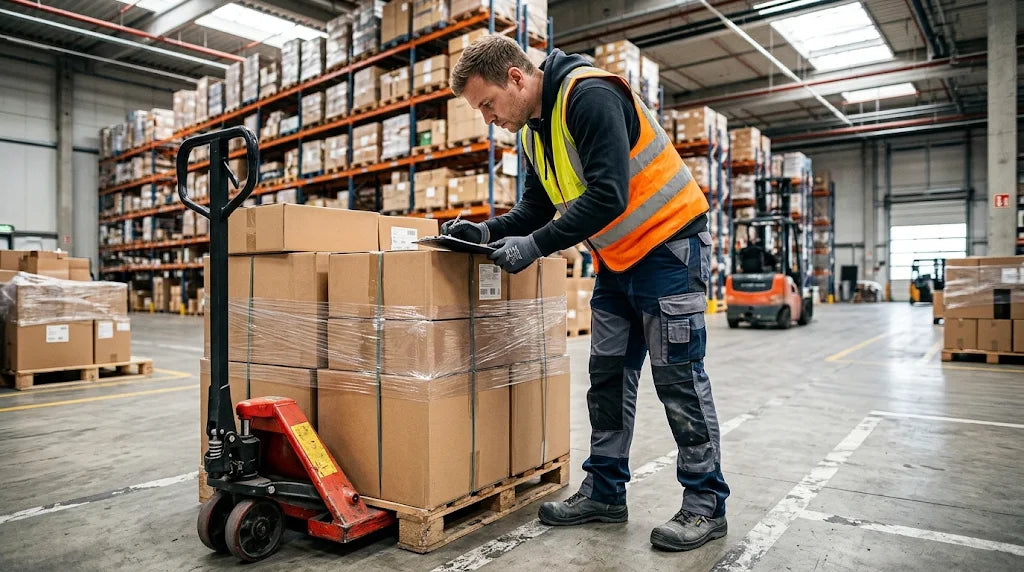



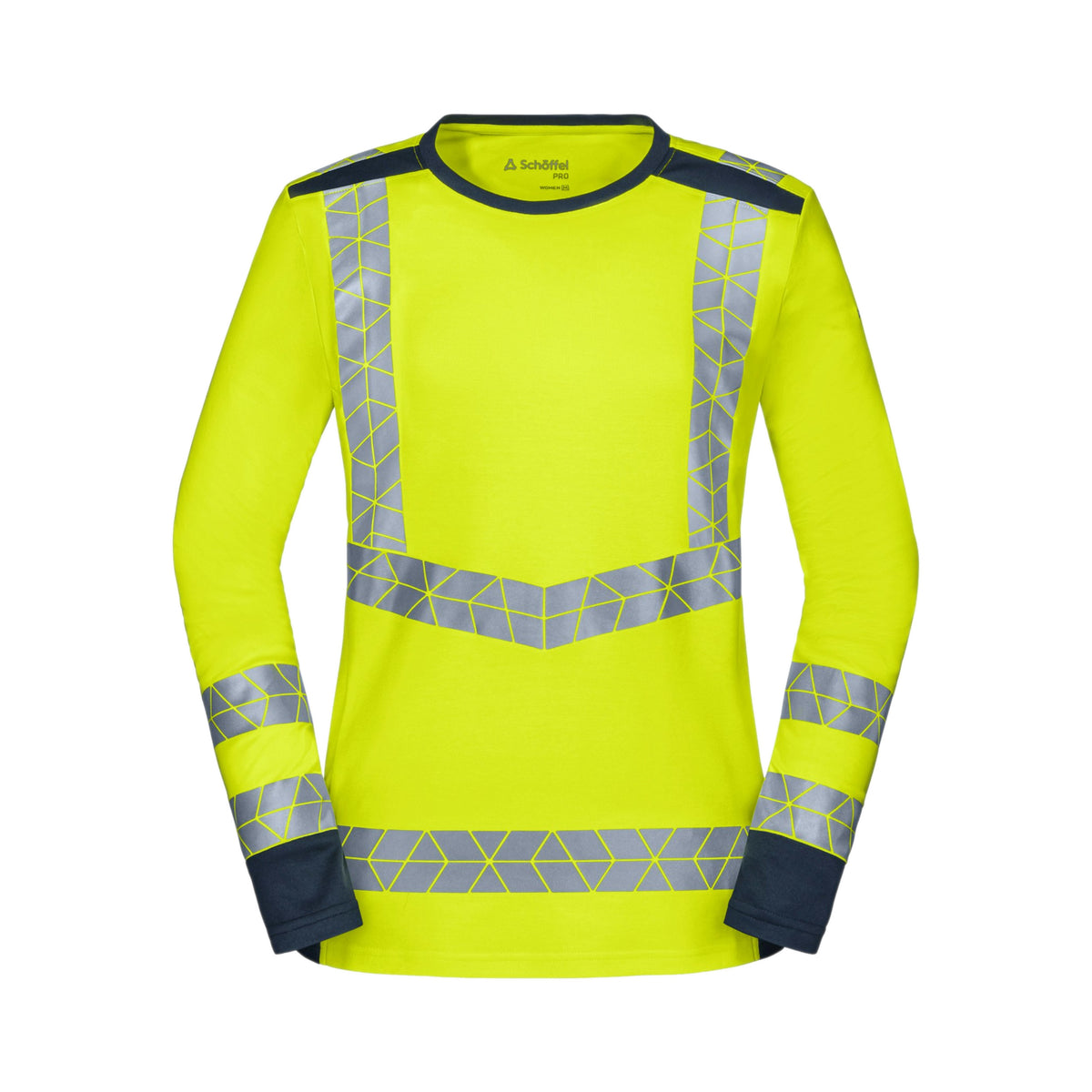


High visibility clothing according to DIN EN ISO 20471: visible by day and night
High visibility clothing makes workers visible where vehicles, construction machinery or industrial trucks are in operation: in road construction, on construction sites, in logistics and during winter maintenance. Fluorescent background material is effective in daylight and at dusk, while retroreflective strips reflect headlight beams at night. The requirements and testing methods are specified in DIN EN ISO 20471:2017-03, which classifies high visibility clothing into classes 1, 2 and 3. Find out more in the glossary under EN ISO 20471.
In this category you will find around 150 items, mainly high visibility jackets, waistcoats and bib and brace trousers, vests, T-shirts and polo shirts, including products from Portwest, Schöffel PRO, Engel, Planam, Richard Leipold, Helmut Feldtmann and BP. Your company's risk assessment determines which class is required at your workplace.

Where high visibility clothing is required
For work in the public highway, the Technical Rule for Workplaces ASR A5.2 “Road Construction Sites” requires high visibility clothing according to DIN EN ISO 20471:2017-03: at least Class 2, and often Class 3 due to traffic volume and local conditions, in fluorescent orange-red or yellow. In warehouses, depots, and industrial settings, the requirements are determined by the risk assessment.
What to check before purchasing
- Class: It is stated on the label and may depend on the size. According to the manufacturer, the Dassy Bilbao High Visibility Vest is Class 2, while sizes XS and S are Class 1.
- Color: fluorescent yellow, orange-red, or red; in road construction, only orange-red or yellow.
- Combination: A jacket and trousers only achieve a higher class together if the manufacturer has tested the combination and stated it on the label.
- Weather: For rain and cold, high visibility weather protection is available with additionally tested weather protection.
- Logos: Prints and embroidery must not reduce the high visibility areas to the extent that the minimum area for the class is fallen below.
Class 1, 2 or 3: What the minimum areas mean
The class is determined by the surface area of fluorescent background material and retroreflective strips. According to DIN EN ISO 20471:2017-03, the following minimum surface areas apply:
- Class 3: 0.80 m² of background material and 0.20 m² of reflective material; the torso must be covered, in addition to sleeves or long trouser legs with reflective strips.
- Class 2: 0.50 m² and 0.13 m², typical for vests, jackets, and bib overalls.
- Class 1: 0.14 m² and 0.10 m², for example on shorts or trousers with narrow high-visibility panels.
The deciding factor is the surface area that remains visible when worn: A jacket worn over a high-visibility vest covers its high-visibility panels, and a shoulder strap or backpack can cover reflective strips. For jackets with a removable inner jacket, the class applies separately to each layer; according to the manufacturer, the Portwest RWS 3-in-1 high-visibility jacket is Class 3 on the outside and Class 2 on the inside.
For warm days, solid-colour high-visibility clothing such as T-shirts and polo shirts is suitable; multi-coloured high-visibility clothing with dark trims is more resistant to soiling. Those who also need protection against flames or electrostatic charging can find models under multi-standard protective clothing. The guide High-Visibility Clothing Class 1, 2 and 3 explains how the classes can be combined; the glossary summarises the surface areas under High-Visibility Classes.

High-visibility clothing by industry
Requirements vary depending on the work environment:
- Road and civil engineering: Class 2 or 3 according to ASR A5.2, find out more under Road construction.
- Warehouses and logistics: Vests or shirts for yard work, loading and forklift traffic, see Warehouse & Logistics.
- Gardening and landscaping: High visibility clothing for work on roads and roadside verges, see Gardening & Landscaping.
- Winter services: lined high visibility jackets, complemented by Winter workwear.

Questions about high visibility clothing
Which visibility class do I need?
Which visibility class do I need?
This is specified in the risk assessment. In the roadway, ASR A5.2 requires at least Class 2 according to DIN EN ISO 20471:2017-03, and Class 3 is often required in areas with heavy traffic. Class 1 provides the least visibility and is not sufficient on its own in the roadway.
When must high-visibility clothing be replaced?
When must high-visibility clothing be replaced?
If colors fade, dirt can no longer be removed, or reflective strips are damaged, the high visibility is no longer guaranteed. If a maximum number of wash cycles is specified on the label, replace the garment after that number of washes at the latest.
Is there high visibility clothing with flame retardancy and antistatic properties?
Is there high visibility clothing with flame retardancy and antistatic properties?
Yes. Multi-standard clothing combines high visibility according to DIN EN ISO 20471:2017-03 with protection against heat and flames according to DIN EN ISO 11612:2015-11 and antistatic properties according to DIN EN 1149-5:2018-11. One example is the BP Multi-Standard High Visibility Jacket 2238; the standards met are listed for each model.
Can high-visibility clothing be printed on, embroidered, or shortened?
Can high-visibility clothing be printed on, embroidered, or shortened?
Logos and prints reduce the fluorescent area, and shortened trouser legs may remove reflective strips. The class is only maintained if the minimum areas required by DIN EN ISO 20471:2017-03 continue to be met. Therefore, please clarify any embellishments and modifications with the manufacturer beforehand.
Do warehouse workers need high-visibility clothing?
Do warehouse workers need high-visibility clothing?
There is no general requirement; the risk assessment determines this. Where forklifts, trucks, or shunting traffic are operating, high-visibility vests or high-visibility shirts help ensure that pedestrians are seen in time.
What is the difference compared to high visibility clothing according to EN 17353?
What is the difference compared to high visibility clothing according to EN 17353?
DIN EN 17353:2025-12 governs high-visibility clothing for medium risks, such as for pedestrians or cyclists. For work in or near road traffic, it is not a substitute for high-visibility clothing according to DIN EN ISO 20471:2017-03.
Weiterführende Links und Quellen
Quellen
- DIN Media: DIN EN ISO 20471:2017-03, Hochsichtbare Warnkleidung, Prüfverfahren und Anforderungen (abgerufen am 15.11.2026)
- DIN Media: DIN EN 17353:2025-12, Ausrüstung mit erhöhter Sichtbarkeit für mittlere Risiken (abgerufen am 15.11.2026)
- BAuA: ASR A5.2 Straßenbaustellen (abgerufen am 15.11.2026)
- BG BAU: Baustein A 008, Hinweise zu Warnkleidung und Warnposten (abgerufen am 15.11.2026)
- Herstellerangaben in den Produktdaten (abgerufen am 15.11.2026)
Die Auswahl der Schutzausrüstung richtet sich nach der Gefährdungsbeurteilung Ihres Unternehmens.