



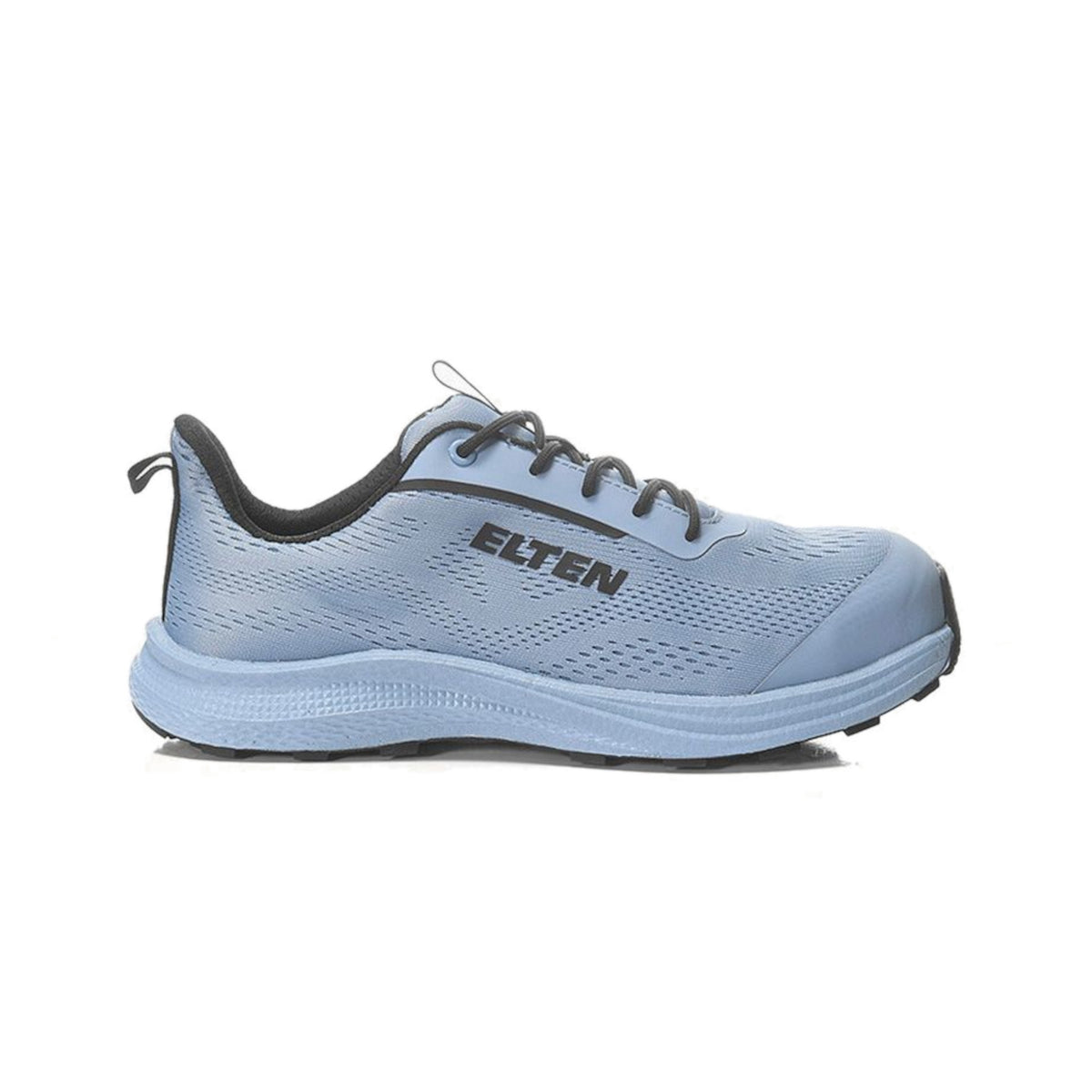


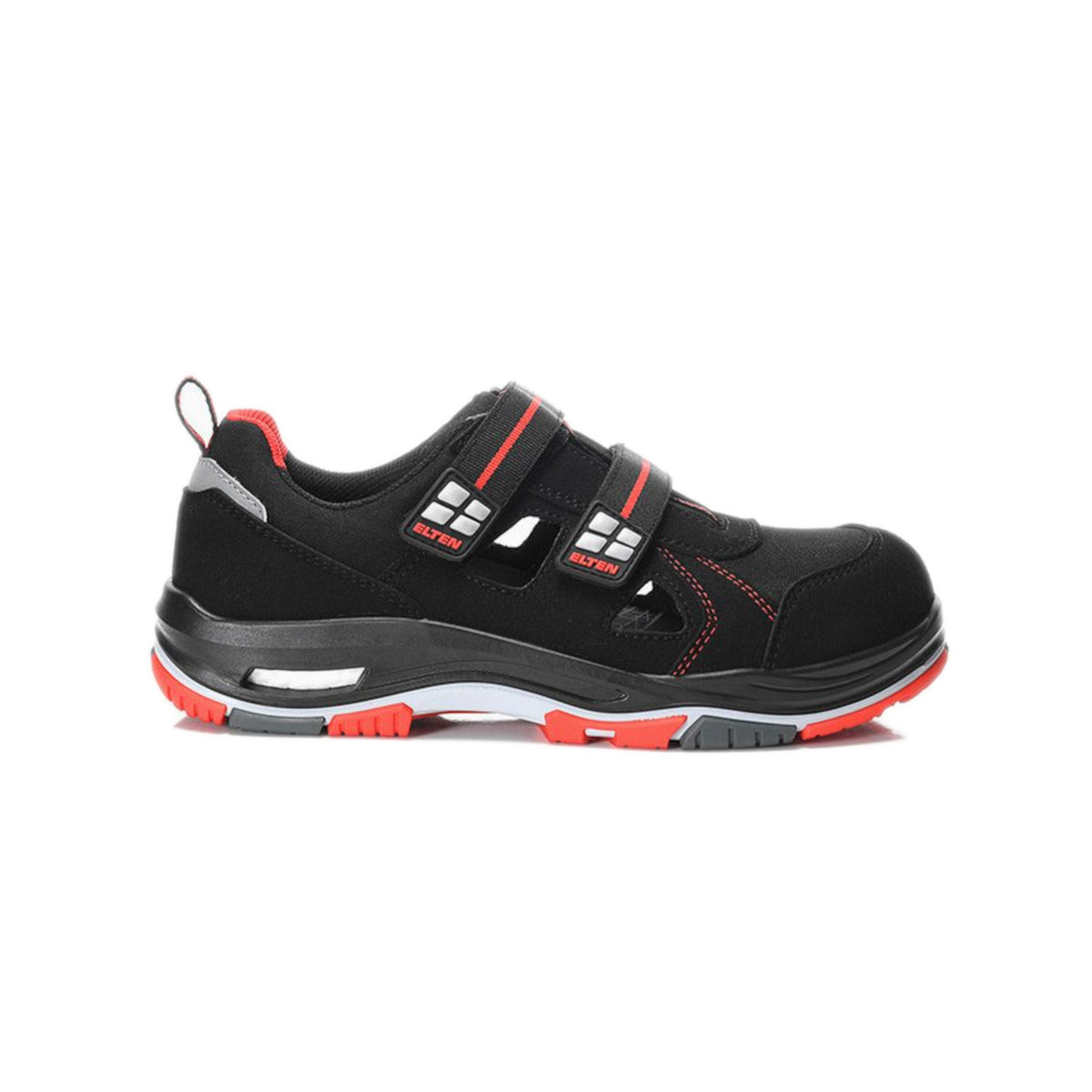


Safety Shoes S1: Basic Protection According to EN ISO 20345
S1 is the basic class of safety shoes according to EN ISO 20345. Every S1 shoe has a toe cap, a closed heel area, antistatic properties and energy absorption in the heel area. It is intended for dry work areas: it is not tested for water penetration and water absorption, and it does not have puncture protection.
In our range you will find safety shoes and safety sandals for warehouse, logistics, workshop and assembly, for women and men, many of them with ESD features. The risk assessment determines which class your company needs. You can find the adjacent classes under S1P, S2 and S3. What matters when buying is explained in our guide Safety shoes: What really matters when buying for the workplace.
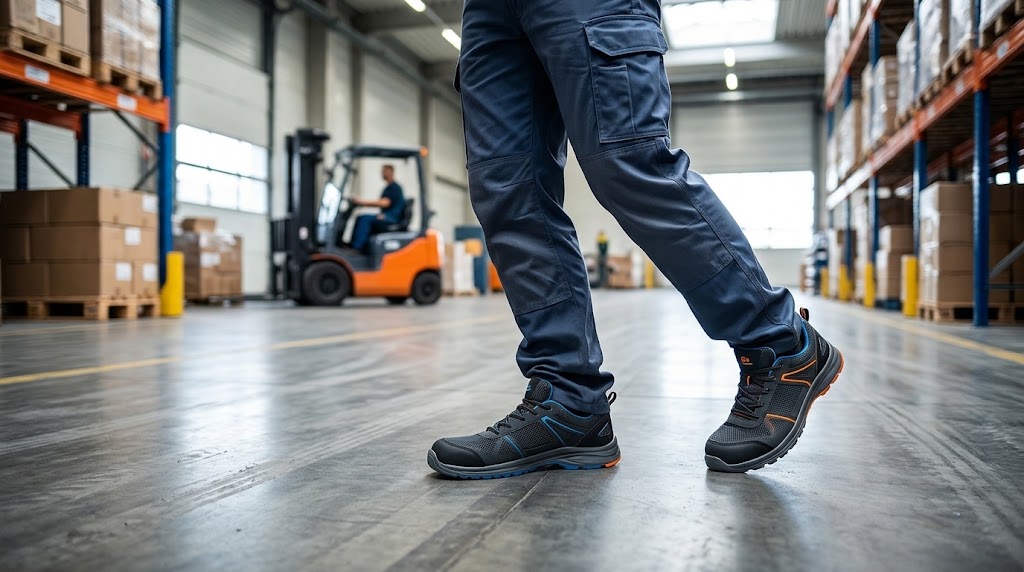
When are S1 safety shoes the right choice?
S1 is suitable when the floor is dry and there are no sharp objects lying around, for example in warehouses, logistics, workshops, or indoor assembly work. There, the toe cap protects against falling objects. Because they lack puncture resistance and water protection, S1 shoes are generally lighter and more flexible than S3 models.
As soon as moisture or sharp objects on the floor are added to the mix, S1 is no longer sufficient. Then S1P with puncture resistance, S2 with water protection, or S3 with both are the better choice.
What you should check before purchasing
- Work environment: dry and without sharp objects on the floor
- Design: safety half-shoe or safety sandal
- Additional symbols suitable for the application, for example ESD or SR
- Year of issue of the standard and CE marking on the shoe
- Fit and comfort, even over a long workday
What does S1 mean, and how does it differ from S1P, S2, and S3?
The EN ISO 20345 abbreviations summarize frequently used requirements. S1 is the foundation, with the other classes built upon it. All safety shoes feature a toe cap.
- S1: toe cap, closed heel area, antistatic properties, energy absorption in the heel area
- S1P: same as S1, plus puncture resistance
- S2: same as S1, plus protection against water penetration and water absorption
- S3: same as S2, plus puncture resistance and treaded sole
Slip resistance has been a basic requirement since the 2022 edition, while the SR symbol indicates an additional test with glycerin. ESD designates dissipative shoes for electrostatically sensitive areas; many S1 models in our range carry this marking. Shoes manufactured according to the 2011 and 2012 standards still bear the old markings, such as SRC. Therefore, the marking on the delivered pair is always the deciding factor.
You can view our entire range under Safety Shoes. S1 models can be found from ELTEN, COFRA, BAAK, and more. If no toe protection is required, we also offer Work Shoes. Further abbreviations are explained in the PPE Glossary.
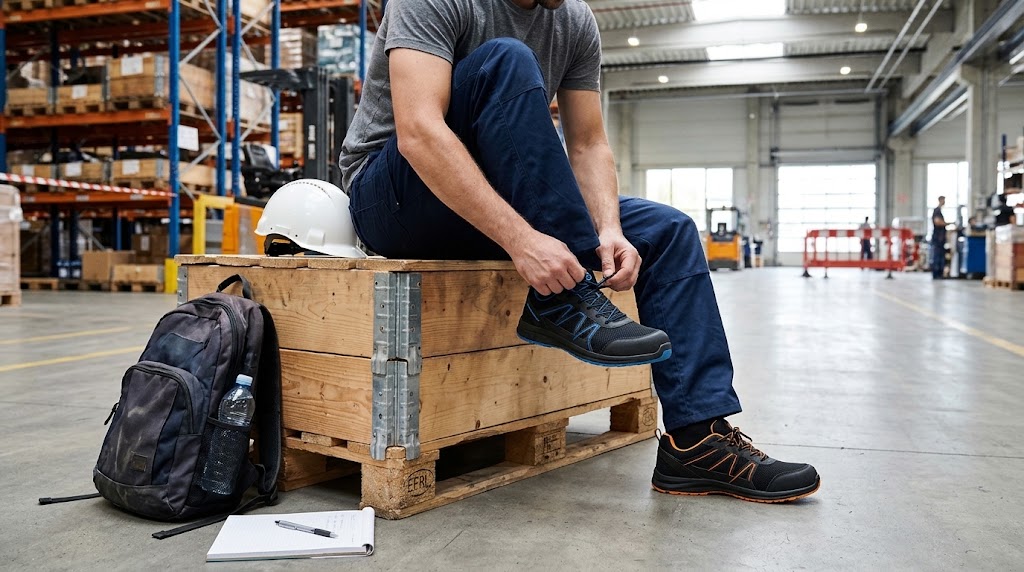
What matters with S1 safety shoes
The S1 class defines the basic protection, while the details depend on the design and marking. You should check these four points before purchasing:
- Design: Low shoe or sandal. Both are available as S1 safety shoes for women and men.
- Comfort and fit: On long workdays, fit and cushioning make the difference. Energy absorption in the heel area is a standard feature of all S1 shoes.
- ESD: The symbol identifies shoes that conduct electricity for areas with electrostatic sensitivity. Many models in our range feature it.
- Limitations of S1: It offers neither water resistance nor puncture resistance. S2 is suitable for wet conditions, S1P for sharp objects, and S3 for both.
The properties your company actually needs are determined by the risk assessment. Suitable socks and accessories complement the shoes. The size charts for Elten shoes and Cofra shoes serve as a guide for sizing.

Frequently Asked Questions about S1 Safety Shoes
What does S1 mean for safety shoes?
What does S1 mean for safety shoes?
S1 is the basic category of EN ISO 20345. The shoe has a toe cap, a closed heel area, antistatic properties and energy absorption in the heel area.
For which work areas are S1 safety shoes suitable?
For which work areas are S1 safety shoes suitable?
Our classification: for dry environments without sharp objects on the floor, such as storage, logistics, workshops, assembly, light industry, and indoor trades. Your company’s risk assessment is the deciding factor.
Are S1 safety shoes waterproof or water-resistant?
Are S1 safety shoes waterproof or water-resistant?
No. S1 does not test for water penetration or water absorption; that testing begins with S2. Shoes with the WR symbol or an S7 rating are completely waterproof.
What is the difference between S1 and S1P?
What is the difference between S1 and S1P?
S1P is equivalent to S1 and also offers puncture resistance. It protects the sole against sharp objects from below, such as nails.
Are S1 safety shoes lightweight and breathable?
Are S1 safety shoes lightweight and breathable?
As a rule, they are built lighter and more flexibly than S3 models because they lack water resistance and puncture resistance. How breathable a model is depends on the upper material. Material and weight are listed in the product description.
What does ESD mean for safety shoes?
What does ESD mean for safety shoes?
ESD designates dissipative footwear for electrostatically sensitive areas, for example during the assembly of electronic components. Many S1 models in the range bear this symbol.