




Chemical protection: Gloves and protective suits for handling hazardous substances
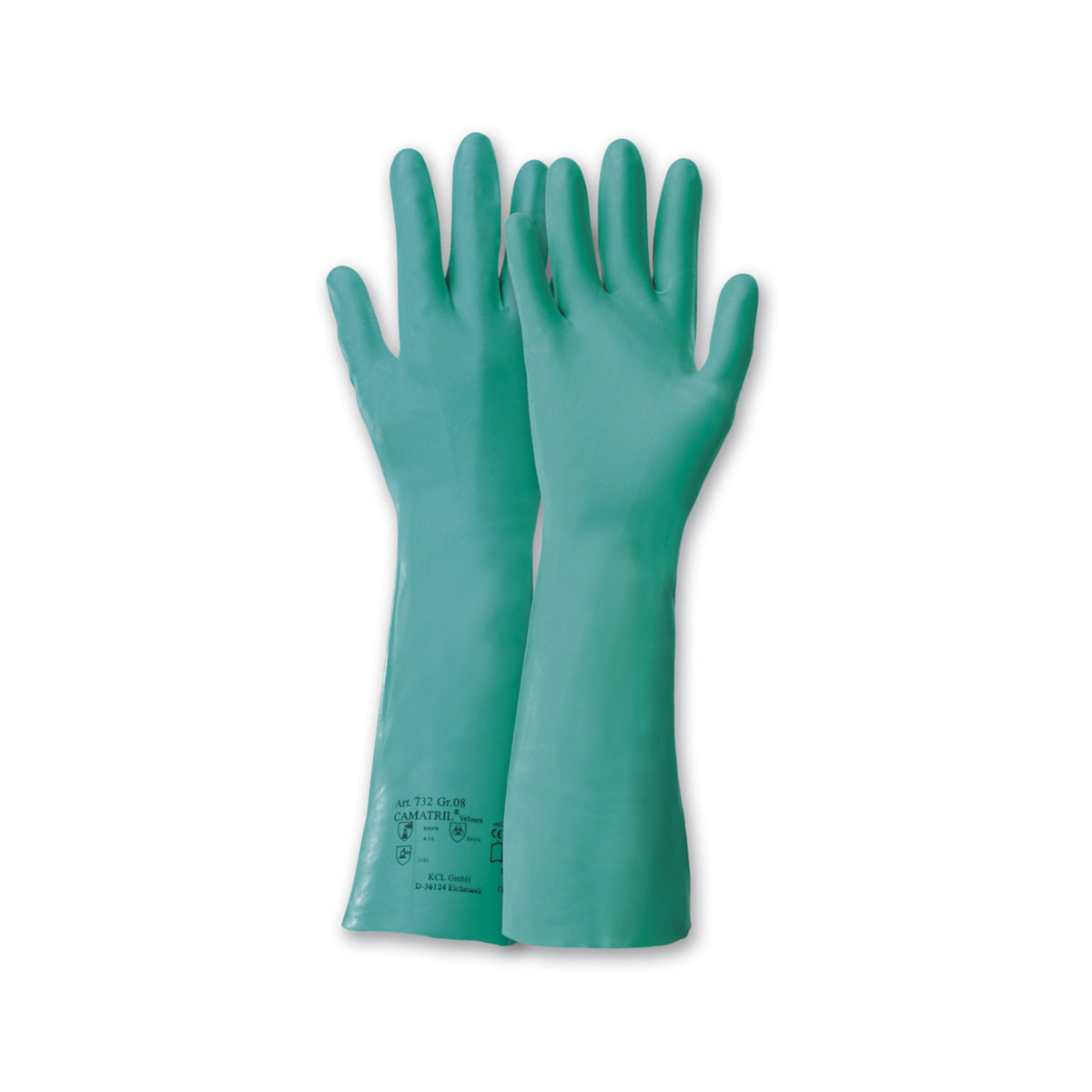
Chemical protection safeguards skin and clothing from acids, alkalis, solvents and other hazardous substances. In this category, you will find over 40 products from Ansell, MAPA, KCL, Wonder Grip and ASATEX: chemical protection gloves made of nitrile, neoprene, latex, butyl and Viton, as well as disposable protective coveralls against splashes and dusts. According to the manufacturers' specifications, all gloves in this category are tested to at least Type B in accordance with DIN EN ISO 374-1:2018-10, meaning they provide protection against at least three test chemicals.
Protective suits are classified by type, from Type 6 for light splashes in accordance with DIN EN 13034:2009-08 to Type 4 for spray mists in accordance with DIN EN 14605:2009-08. Thin gloves for short-duration tasks can be found under Disposable Gloves. The required personal protective equipment is determined by your company's risk assessment.

From the Safety Data Sheet to the Right Personal Protective Equipment
The starting point for any selection is the substance's safety data sheet. In Section 8, the manufacturer specifies the required personal protective equipment, often including the glove material and thickness. Typical applications for chemical protection are:
- Decanting and filling acids, alkalis, and solvents
- Cleaning with concentrated cleaning agents and disinfectants
- Draining pumps, valves, and pipes during maintenance
- Work in laboratories and chemical production
What to check before purchasing
- Test chemicals: The letters under the pictogram must match the substances at the workplace.
- Material: Every material has strengths and limitations; the manufacturer's resistance data are decisive.
- Cuff length: long cuffs for hand immersion and overhead work.
- Additional protection: cut protection according to DIN EN 388:2019-03, cold or heat protection, antistatic design according to DIN EN 16350:2014-07.
- Protective suit: type suitable for the form of the substance, i.e., particles, splashes, or spray mists.
Chemical Protective Suits: An Overview of Types 1 to 6
Chemical protective clothing is classified by type; the lower the number, the tighter the suit. According to the DGUV PPE specialist department:
- Type 1 and Type 2: Suits for gases and vapors, Type 1 gas-tight; they are not part of the range.
- Type 3: liquid-tight according to DIN EN 14605:2009-08.
- Type 4: spray-tight against spray mists and aerosols, also according to DIN EN 14605:2009-08.
- Type 5: protection against airborne solid particles according to DIN EN ISO 13982-1:2011-02.
- Type 6: limited protection against splashes of small quantities of liquids according to DIN EN 13034:2009-08.
Disposable overalls often meet several types at once: The Ansell AlphaTec 2500 Model 111 is marked as Type 4/5/6, the ASATEX CoverBase SMS-1 as Type 5/6.
What the glove markings mean is explained in the glossary under EN ISO 374 and Glove Materials. You can find models by material under Butyl and Viton Gloves, Chloroprene and Neoprene Gloves and Nitrile Gloves. Full-view goggles protect the eyes against splashes.

Chemical protection in everyday work
Even the right glove only provides protection when used correctly:
- Check for cracks, holes, and discoloration before each use.
- When working overhead, use gauntlet-style gloves with a cuff, such as the Ansell AlphaTec 58-005.
- Clean and dry reusable gloves only according to the manufacturer's instructions.
- Replace gloves promptly, or at the latest when they are damaged.
For regular supplies, the B2B registration is worth it.

Questions about chemical protection
Which glove is suitable when mixing chemicals?
Which glove is suitable when mixing chemicals?
The identification letters according to DIN EN ISO 374-1:2018-10 apply to individual test chemicals. Mixtures may behave differently than the individual substances; therefore, ask the manufacturer for test data for your mixture. Models with many test chemicals, such as the Ansell AlphaTec 53-003, cover a wide range.
What is the difference between Type 5 and Type 6?
What is the difference between Type 5 and Type 6?
Type 5 protects against airborne solid particles such as dust in accordance with DIN EN ISO 13982-1:2011-02. Type 6 provides limited protection against splashes of small quantities of liquids in accordance with DIN EN 13034:2009-08. Many disposable coveralls, such as the ASATEX CoverBase SMS-1, meet both types.
Is a Type 4 suit sufficient if the liquid strikes in a stream?
Is a Type 4 suit sufficient if the liquid strikes in a stream?
No. Type 4 is spray-tight according to DIN EN 14605:2009-08 and is designed for spray mists. A liquid-tight suit of Type 3 according to the same standard is intended for protection against liquid jets. We do not currently carry Type 3 suits in our shop.
Are there chemical protective gloves with cut resistance?
Are there chemical protective gloves with cut resistance?
Yes. The Ansell AlphaTec 58-835 is marked 4X43F according to DIN EN 388:2019-03 and has also been tested according to DIN EN ISO 374-1:2018-10. The MAPA KryTech 395 achieves 4X43D and Type B. You can find more models under Cut-resistant gloves.
When are antistatic chemical protective gloves useful?
When are antistatic chemical protective gloves useful?
Where flammable substances are processed and electrostatic discharges can become an ignition source. The electrostatic properties of protective gloves are regulated by DIN EN 16350:2014-07; the Ansell AlphaTec 58-001 ESD meets them, according to Ansell. Find out more in the encyclopedia under EN 16350. Whether antistatic gloves are required is determined by the risk assessment.
Weiterführende Links und Quellen
Quellen
- DIN Media: DIN EN ISO 374-1:2018-10 (abgerufen am 15.11.2026)
- DIN Media: DIN EN 14605:2009-08 (abgerufen am 15.11.2026)
- DIN Media: DIN EN 13034:2009-08 (abgerufen am 15.11.2026)
- DIN Media: DIN EN ISO 13982-1:2011-02 (abgerufen am 15.11.2026)
- DIN Media: DIN EN 388:2019-03 (abgerufen am 15.11.2026)
- DIN Media: DIN EN 16350:2014-07 (abgerufen am 15.11.2026)
- DGUV Fachbereich PSA: Chemikalienschutzkleidung, sicher ist sicher 10/2018 (abgerufen am 15.11.2026)
- Herstellerangaben Ansell, MAPA, KCL und ASATEX in den Produktdaten (abgerufen am 15.11.2026)
Die Auswahl der Schutzausrüstung richtet sich nach der Gefährdungsbeurteilung Ihres Unternehmens.